|
|
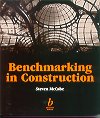
| Benchmarking in Construction |
|
|
| Benchmarking is one of the management techniques the construction industry now needs to adopt if it is going to meet the new targets of increasing efficiency. Preferred contractors are increasingly being awarded contracts if they can demonstrate the lean construction practices which benchmarking leads to. This accessible book will help the construction professional set up benchmarking systems. It explains the theoretical background and offers clear, practical guidance with extensive reference to case studies from best practice firms. |
| | Review of this title : | What a breath of fresh air - a good academic book that is also readable and written with personal commitment. Much of it is written in the first person, and explains the development of the author's own knowledge and understanding, and the events and publications which influenced him most. This is an effective way to explain and describe a subject that will be new to quite a significant proportion of the intended readership; what comes across is someone wishing to share this experience in a helpful way, rather than taking a narrowly didactic approach.
The book is well-structured, beginning with a personal introduction and "getting to grips with the concepts". Benchmarking itself only appears in the book after a careful contextual review of Total Quality Management and the importance of effecting changes to traditional organisational cultures. Benchmarking itself is then reviewed thoroughly, in a fairly traditional academic way. Its historical development is clearly laid out, different approaches are explained, key authors introduced and practices assessed. There are chapters on critical success factors, customer satisfaction, and ways of becoming "world class". Finally, there is a chapter "Moving from theory to practice", which contains a series of nine case studies in which individual managers recount their own personal experiences of benchmarking, again refreshingly written in the first person.
The book is a good learning text. Each chapter begins with a box which states its objectives clearly, and ends with a summary which also appears in a box. The text and layout is visually straightforward and admirably clear, and appropriately illustrated.
This is an excellent introductory text. It develops the subject from a perspective of principles woven within the story of its development, and then provides very clear guidance on the framework and techniques of benchmarking. It also provides a much broader view, offering a perspective on the need to improve the performance of a fairly backward industry, with a central focus on human resource management. The chapter on cultural change is very good, and making this a central theme of the book is very consistent with contemporary construction management theory.
In many ways, this does go beyond an introduction, but stops well short of a practical manual. It does provide a "three-phase, fourteen-step approach to benchmarking", which draws the book together, but this is nevertheless fairly basic. So, its main use to the managers of construction firms will be to provide a sound foundation for developing and managing their own benchmarking schemes. It should also provoke serious thought about what sort of managers they want to be at the end of this decade.
| | Reviewed By : Professor Richard Neale FCIOB, University of Glamorgan |
|
 |
| Below is a selection of our bestselling similar items |
|
 |
 |
|
 |
|
|
| Your basket is currently empty |
|
 |
| Enter your email address to join
our mailing list |
|
 |
 |
|  |
|

|
|